
Planning Permission for Glamping Pods: What You Need to Know in 2026
Adding glamping pods to your land is one of the most exciting ways to create a new income stream from a rural property. But before you start thinking about interiors and pricing, there’s one question almost every prospective pod owner asks first: do I need planning permission?
The short answer is: it depends. This guide walks through the key rules that apply to glamping pods in England in 2026, so you know exactly where you stand before getting in touch with a supplier or your local council.
Are Glamping Pods Classed as Permanent Structures?
This is the crux of the planning question. Glamping pods exist in a grey area between permanent buildings and temporary structures, and how yours is classified will largely determine what permissions you need.
A pod that is:
- Fixed to a permanent foundation (concrete pad, ground anchors)
- Connected to mains water, mains sewage and 240v electricity
- Intended to be used year-round for commercial accommodation
...is very likely to require full planning permission, regardless of its size.
Chaigley pods include mains water, mains sewage and 240v hook-up as standard features, and are built with year-round comfort in mind — so commercial operators should factor planning into their project timeline from the outset.
Permitted Development: When You Might Not Need Full Planning
Permitted Development (PD) rights allow certain types of development to proceed without a full planning application. For glamping pods, PD rights can apply in specific situations:
Temporary or Seasonal Use
If pods are used for no more than 28 days per year and are genuinely temporary (i.e. moveable, not fixed to the ground), they may not require permission under Class B of the General Permitted Development Order. However, this is impractical for a commercial glamping business and most operators will exceed 28 days quickly.
Agricultural Land: Class Q and Farm Diversification
If you are a farmer looking to diversify, Class Q permitted development rights allow the conversion of certain agricultural buildings to residential use — but this does not extend to new-build pods placed in open fields.
For farm diversification projects involving glamping, most landowners will need to apply for full planning permission or a Certificate of Lawful Use. Some local planning authorities (LPAs) are more supportive of rural tourism than others, so early pre-application engagement with your LPA is strongly recommended.
Change of Use
If your land is designated as agricultural, placing pods for commercial use will typically constitute a change of use from agricultural to tourism/leisure (Use Class C1 or sui generis depending on the scale). This requires a planning application.
Key Factors That Influence Planning Decisions
Each application is decided on its own merits, but planning officers will typically consider:
• Visual impact: Are the pods visible from public roads or footpaths? Will they harm the landscape character?
• Access and highways: Is the road access suitable for the additional traffic a glamping site will generate?
• Ecology and trees: Are there protected species, habitats or TPO trees on or near the proposed site?
• Drainage and utilities: How will foul water and surface water be managed?
• Noise and light: Will the site affect neighbouring properties, particularly at night?
• Economic benefit: Many councils are supportive of rural tourism businesses that generate local employment and visitor spending.
National Parks and Areas of Outstanding Natural Beauty (AONBs)
If your land falls within a National Park or AONB (such as the Forest of Bowland AONB in Lancashire), permitted development rights are more restricted and planning policies are stricter. This doesn’t mean planning permission is impossible — many successful glamping sites operate within protected landscapes, but applications need to demonstrate that the development is sympathetic to the landscape.
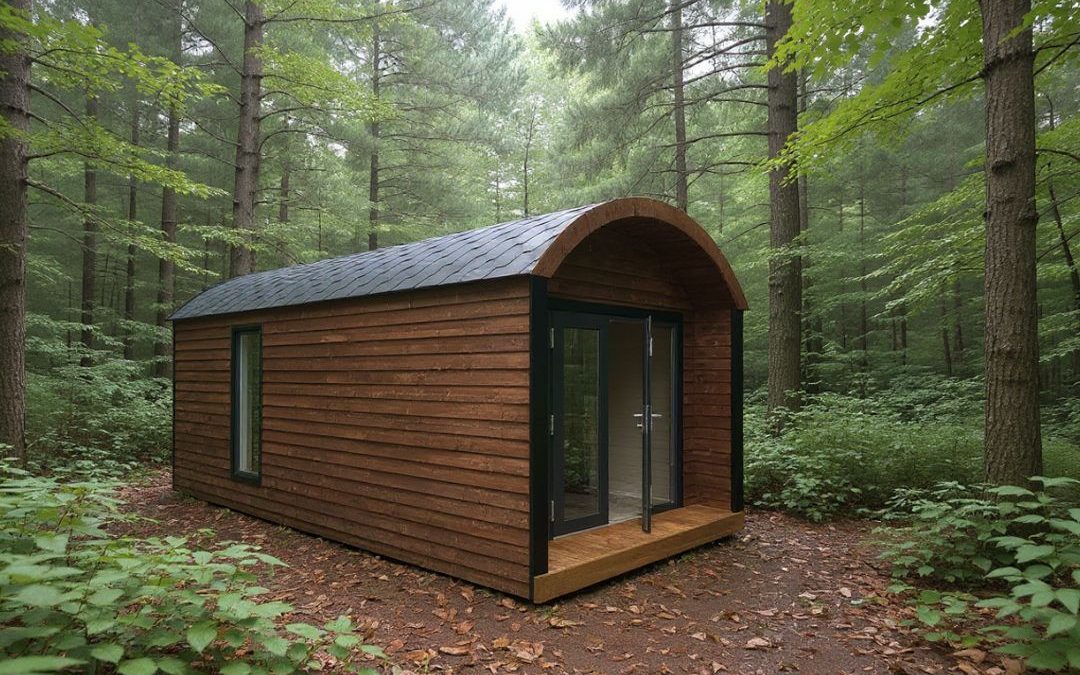
Timber framed glamping pods with natural cladding, like those Chaigley manufactures from spruce in our Lithuanian workshops, tend to perform well in protected landscape applications because of their low visual impact and natural materials
Other Consents to Consider
Planning permission is not the only approval you may need. Depending on your project, you should also investigate:
- Building Regulations: Even where planning permission isn’t required, building regulations approval may be needed for electrical installations, drainage and structural integrity.
- Environmental Health: Commercial accommodation sites will need to meet fire safety requirements and may require a licence from the local authority.
- Public Liability Insurance: Essential for any commercial glamping operation.
- Business Rates: Glamping pods used commercially are typically subject to business rates rather than council tax. Some small sites may qualify for Small Business Rate Relief.
How Long Does Planning Permission Take?
A standard planning application in England should be decided within 8 weeks, though complex applications or those requiring additional consultations can take longer. Pre-application discussions with your local planning authority can significantly speed up the process and improve your chances of approval.
It’s worth building planning into your overall project timeline from the beginning. At Chaigley, our pods are made to order in our Lithuanian workshops, so the lead time on production can run in parallel with your planning application — meaning you’re ready to welcome guests sooner once consent is granted.
Tips for a Successful Planning Application
- Engage early: Speak to your local planning authority before submitting. Pre-application advice is usually available and helps avoid costly refusals.
- Use a planning consultant: For larger or more complex sites, a specialist rural planning consultant can be a worthwhile investment.
- Prepare a strong supporting statement: Outline the economic benefits to the local area, including jobs and visitor spend.
- Choose materials carefully: Natural timber cladding, green roofs and sympathetic landscaping can all strengthen an application.
- Consider a phased approach: Starting with two or three pods rather than ten gives planning officers less to object to, and allows you to prove the concept before expanding.
Thinking About Adding Glamping Pods to Your Land?
At Chaigley Leisure, we work with landowners, farmers and rural business owners across Lancashire and beyond to help them realise the potential of their outdoor space. Our glamping pods are made to order in our Lithuanian workshops and built for year-round commercial use, with features including wood burning stoves, 100mm insulation, full bathroom facilities and optional underfloor heating.
If you’d like to discuss your project — whether you’re at the planning stage or ready to order — we’d love to hear from you.